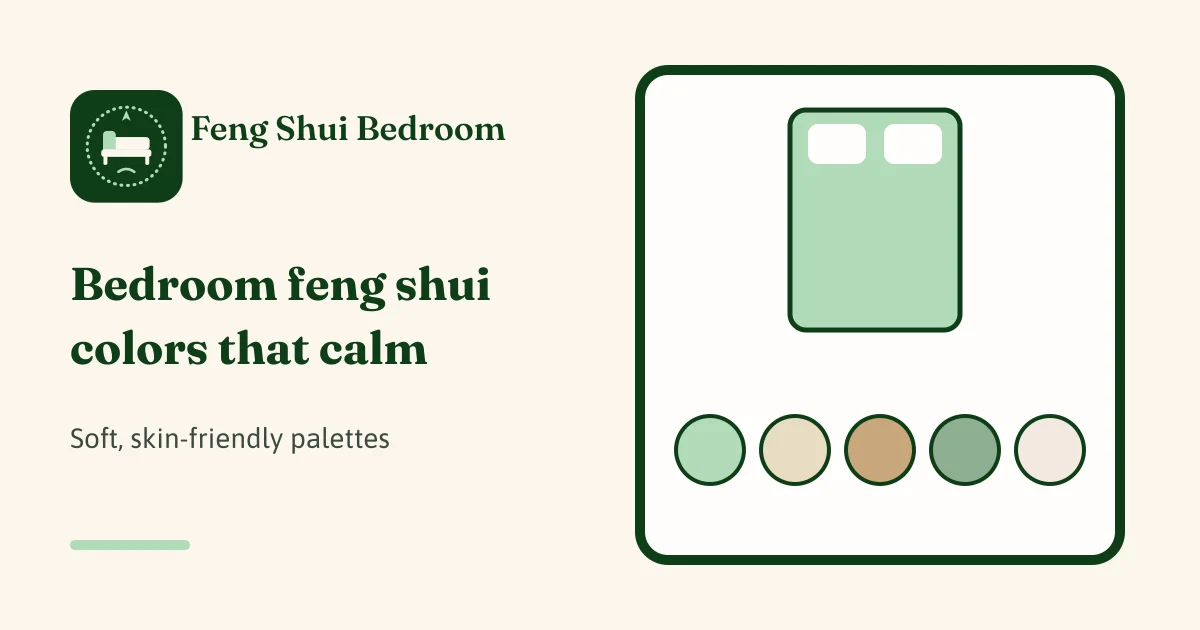
Bedroom Feng Shui Colors: How to Choose Calm, Restful Tones
A practical guide to feng shui bedroom colors: soft palettes, the five elements, accent colors, colors to use carefully and renter-friendly ways to change color without painting.
Color is one of the fastest ways to change how a bedroom feels, and one of the most personal. In feng shui bedroom advice, the goal is not to follow a strict color rule but to create a room that feels calm, balanced and suited to rest. That usually means softer, quieter tones on large surfaces and more vivid colors used sparingly.
This guide explains how feng shui thinks about bedroom colors, how the five elements map to palettes, which colors to use with care, how to choose a palette step by step and how to change the colors of a rented room without painting.
How feng shui thinks about bedroom color
Feng shui divides spaces broadly into more active (yang) and more restful (yin) areas. Kitchens, entrances and living rooms can handle brighter, more energetic colors. The bedroom is the most yin room in the home, so its palette usually leans toward:
- soft and muted rather than saturated
- warm neutrals and skin tones rather than stark white or neon
- matte finishes rather than high gloss
- gentle contrast rather than sharp, busy patterns
This aligns with common design advice for restful spaces. You do not need to adopt the yin/yang framework to recognise that a room in soft sand and sage feels different from one in bright red and electric blue.
The five elements and color
Classical feng shui links colors to five elements. Understanding them helps you balance a palette rather than memorise rules.
Earth: yellows, sand, terracotta, brown
Grounding and stable. Earth tones are a very common base for a feng shui bedroom: beige walls, sand linen, terracotta pottery, warm wood.
Wood: greens and soft teal
Associated with growth and freshness. Sage, olive and soft eucalyptus green bring calm without feeling cold. Plants count here too.
Metal: white, grey, soft metallics
Clean and clarifying. Warm white and pale grey work well on walls; brushed brass or matte silver as small accents.
Water: blue, navy, black
Quiet and deep. Muted blue-grey or soft navy can be very restful; large areas of pure black are usually avoided in bedrooms.
Fire: red, strong pink, orange, purple
Energetic and warm. Best used as small accents, such as a cushion, a candle or a painting, rather than whole walls.
A balanced bedroom usually leans on earth, soft wood and soft metal for large areas, with small touches of fire and water.
Recommended palettes (examples)
These are example palettes to start from, not prescriptions:
- Warm neutral: warm white walls, oatmeal linen, oak wood, terracotta accent.
- Soft green: pale sage walls, cream bedding, natural wood, a touch of blush.
- Calm blue-grey: muted blue-grey walls, white bedding, light grey rug, brass lamp.
- Earthy: sand walls, rust throw, walnut nightstands, olive plant.
- Soft blush: pale peach or blush walls, cream bedding, light wood, sage cushion.
How to choose your bedroom palette step by step
- Start with what you cannot change. Floors, wardrobes, window frames and large furniture set the base.
- Check the light. North-facing or dim rooms suit warmer tones; very sunny rooms can take cooler ones.
- Pick one main color for about 60 percent of the visible surfaces (usually walls).
- Pick a secondary color for about 30 percent: bedding, curtains, rug.
- Add an accent for the last 10 percent: cushions, art, a lamp.
- Test samples on two walls and look at them morning and evening.
- Reduce busy patterns near the bed, especially on the headboard wall.
- Review after a week and adjust textiles before repainting anything.
Colors to use with care
- Bright red on all walls. Very stimulating; keep it to accents.
- Neon and very saturated colors. Hard to rest in for many people.
- Pure black on large areas. Can make a room feel heavy, especially if small.
- Stark, cold white everywhere. Can feel clinical; warm it with textiles and wood.
- Strong contrasting stripes behind the headboard. Visually busy at eye level from bed.
Lighting changes every color
The same paint can look warm and soft at noon and flat or cold at night. Because you mostly use a bedroom in the evening, judge colors under your real lamps.
- Warm white bulbs (around 2700K) flatter earthy and blush palettes and feel calm before sleep.
- Neutral white (around 4000K) suits a reading corner or wardrobe area but can feel clinical by the bed.
- Several low light sources at different heights, such as two bedside lamps and a floor lamp, give softer shadows than one bright ceiling light.
- Dimmers let the same palette work for getting dressed in the morning and winding down at night.
If a color looks wrong after dark, try changing the bulb before you repaint. It is cheaper, faster and often solves the problem.
Common mistakes
- Choosing a color from a phone screen without testing a sample on the wall.
- Ignoring the light direction and ending with a cold, grey room.
- Too many accent colors competing with each other.
- Glossy paint that reflects lamps at night, similar to the issue with mirrors facing the bed.
- Treating color as the main fix while the bed sits in the door line. Layout comes first; see bed placement and the commanding position.
Renting? Change color without painting
If you cannot paint, textiles do most of the work:
- Bedding: the largest single color surface after walls.
- Curtains: floor-length curtains in a soft tone change the whole window wall.
- Rug: anchors the palette and softens hard floors.
- Headboard cover or fabric panel: adds color exactly where you look.
- Removable wallpaper or a large framed fabric on one wall.
- Lampshades and bulbs: warm white bulbs (around 2700K) soften any palette.
Our guide to rental bedroom feng shui has more renter-friendly adjustments.
Color in small bedrooms
In a small room, keep walls light and calm, and use the same color family on walls and curtains so edges blur. Add depth with a slightly deeper tone on the headboard or bedding rather than many contrasting colors. See small bedroom feng shui layout ideas for more.
Personal elements and Kua numbers
Some practitioners choose accent colors based on your personal element or Kua number. If you enjoy that approach, start with a calm base palette and then pick accents that match. The Kua number calculator and the feng shui calculator hub are good starting points. Treat it as a fine-tuning layer, not a reason to paint the room bright red.
Example scenarios (illustrative)
These are illustrative examples prepared by our team, not user testimonials.
Scenario A: cold white rental. A north-facing rental had bright white walls and grey bedding. Switching to oatmeal linen, a terracotta throw, a wool rug and warm bulbs made the room feel warmer without painting.
Scenario B: red accent wall. A bedroom had a red feature wall behind the bed. The owner repainted it in muted clay and moved the red into a single framed print on a side wall.
Scenario C: small dark room. A very small room with dark grey walls felt cramped. Pale sage walls, matching curtains and a light rug made the space feel larger, with a deep green bedspread for contrast.
Color checklist
- Main wall color soft and muted
- One main, one secondary, one accent color
- Bright colors used only as small accents
- Matte finish on walls
- Calm, low-contrast headboard wall
- Warm bulbs in bedside lamps
- Palette tested in morning and evening light
For the full room review, use the feng shui bedroom checklist.
Check your bedroom in one photo
Colors are easier to judge once the layout is right. Upload one wide, bright photo to the feng shui bedroom analyzer to check bed position, door line and mirrors first; then use the palette ideas above to finish the room.
Frequently asked questions
What is the best feng shui color for a bedroom?+
There is no single best color. Most feng shui bedroom advice favours soft, muted, skin-like and earthy tones such as warm white, beige, sand, soft peach, sage and muted blue-grey, because they feel calm.
Is red bad in a bedroom?+
Red is considered very active. As a small accent such as a cushion or a piece of art it is fine for many people; as the colour of all four walls it is usually considered too stimulating for a restful room.
Can I use dark colors in a bedroom?+
Deep navy, charcoal or forest green can feel cocooning if the room has enough light and the colour is balanced with lighter textiles. Avoid making a small, dark room even darker without good lighting.
How do the five elements relate to bedroom colors?+
Each element is linked with a family of colours: wood with greens, fire with reds and strong pinks, earth with yellows and browns, metal with whites and greys, water with blues and black. A calm bedroom usually leans on earth, soft wood and soft metal tones.
Should I choose colors based on my Kua number or birth element?+
Some practitioners do. It is an optional layer. Start with a palette you find calm, then use personal elements to choose accents if you enjoy that approach.
Do I have to repaint to improve bedroom colors?+
No. Bedding, curtains, a rug, a throw and artwork change the dominant colours of a room significantly, which is ideal for renters.
Will the right color improve my sleep or relationship?+
We do not promise outcomes. Colour influences how a room feels, and many people find softer palettes more relaxing, but results depend on many factors.
Author

Categories
More Posts
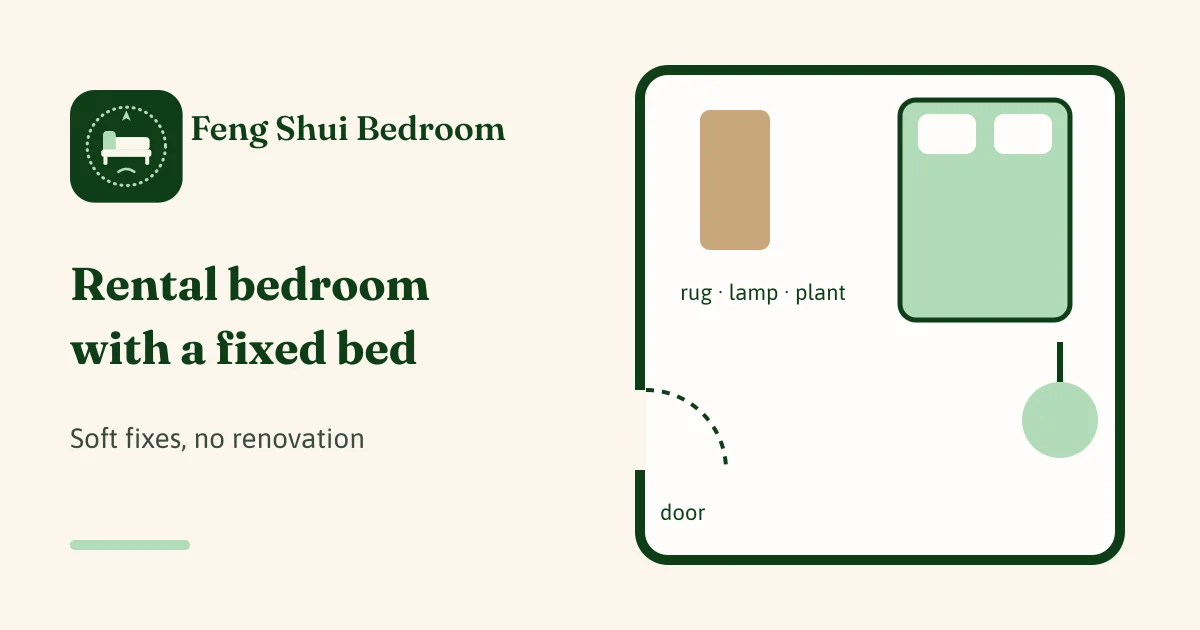
Rental Feng Shui Bedroom: What to Do When You Cannot Move the Bed
Fixed bed, landlord rules or built-in wardrobes? A practical rental feng shui bedroom guide with ranked soft fixes for the door line, headboard, windows, mirrors and clutter.
Feng Shui Bedroom Checklist: 12 Layout Rules You Can Check Tonight
A complete feng shui bedroom checklist: bed position, headboard, door line, mirrors, windows, clutter, lighting, colors and electronics, with quick fixes and rental alternatives for each rule.
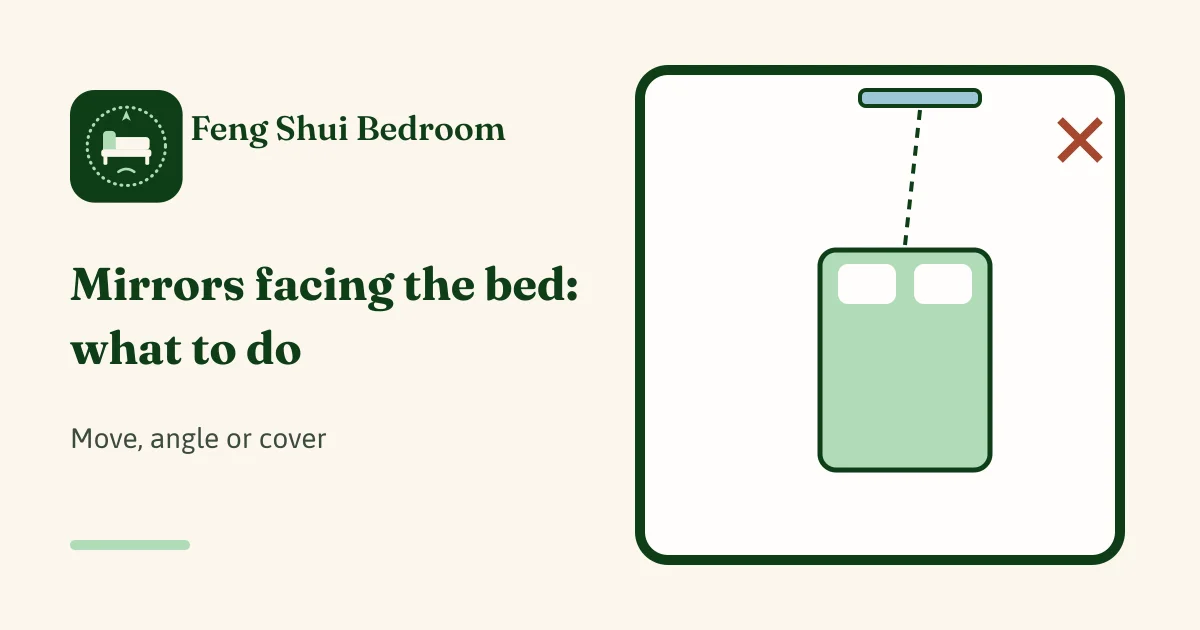
Mirror Facing the Bed Feng Shui: Practical Bedroom Mirror Rules and Fixes
Is a mirror facing the bed bad feng shui? Learn where bedroom mirrors work, what to change first, mirrored wardrobe fixes and renter-friendly alternatives.