Bed Placement Feng Shui: How to Find the Commanding Position in Any Bedroom
A complete guide to bed placement feng shui: find the commanding position, avoid the door line, choose a solid headboard wall and fix awkward or rented bedrooms.
If you only change one thing in your feng shui bedroom, change the bed. Bed placement shapes how the room feels when you walk in, how easily you move around at night and, in traditional feng shui, how supported you are while you rest. The core idea is called the commanding position, and once you understand it, most other bedroom rules fall into place.
This guide explains what the commanding position is, how to find it in your own room step by step, how to choose a headboard wall, how to deal with doors, windows, slanted ceilings and en-suite bathrooms, and what to do when you rent or the bed simply cannot move.
What is the commanding position?
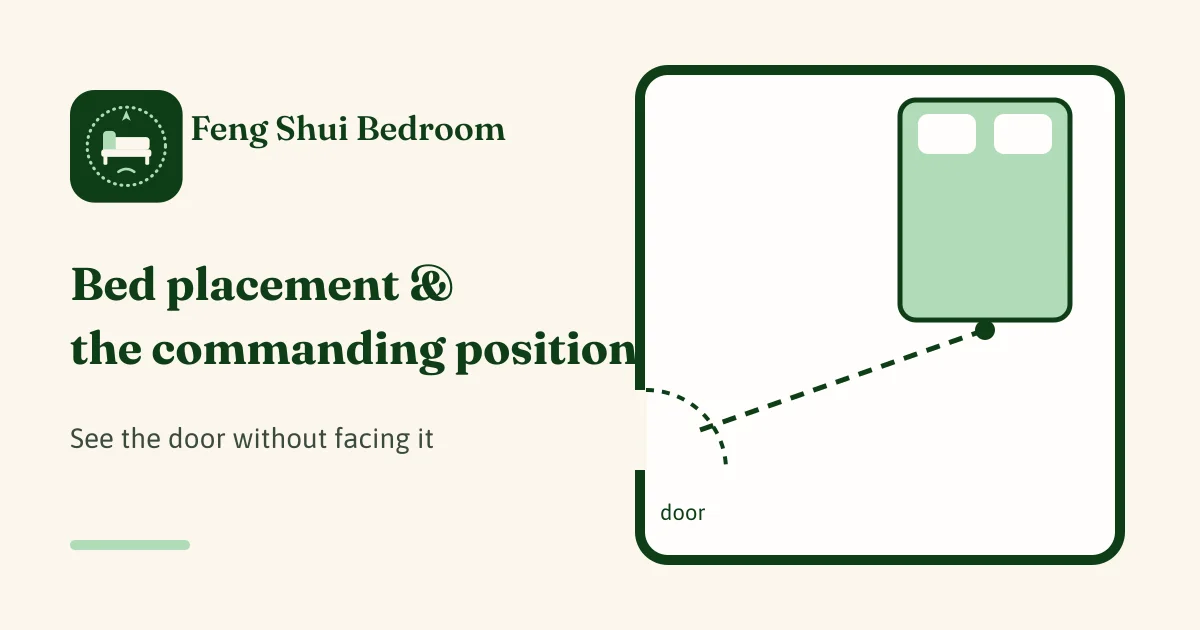
The commanding position is a bed placement with three qualities:
- You can see the bedroom door from the bed, usually diagonally across the room.
- You are not directly in line with the door, so you are not lying in the path of everything that comes in.
- There is a solid wall behind your head, rather than a window, a door or open space.
The reasoning is intuitive. People tend to relax more when they can see who might enter, when nothing is behind them and when they are not in the main traffic route. Feng shui describes this in terms of qi flow and support; design psychology describes it as prospect and refuge. You do not need to adopt either framework to notice that a bed facing the door from a protected corner simply feels calmer.
How to find the commanding position step by step
Grab a sheet of paper or open a notes app and work through these steps.
- Sketch the room. Draw the walls, the door (including which way it swings), windows, radiators, built-in wardrobes and any sloped ceiling.
- Draw the door line. Imagine a straight band the width of the door projecting into the room. This is the path qi, people and drafts follow.
- Mark candidate headboard walls. Look for solid walls without windows or doors, long enough for the bed plus at least a small bedside space.
- Test the diagonal. From each candidate wall, check whether you could see the door while lying down, without the bed sitting inside the door line.
- Check circulation. Make sure you can walk around at least one side of the bed (two sides for couples) with roughly 60 cm or more of space if your room allows it.
- Check what faces the bed. Note mirrors, sharp corners of wardrobes, shelves above the head and TV screens.
- Choose the best compromise. Few rooms are perfect. Rank by: solid headboard wall, view of door, out of door line, circulation, then everything else.
If you would rather not sketch, take one wide photo following our guide on how to photograph your bedroom for feng shui and let the bedroom analyzer identify the door line and headboard wall for you.
Choosing the headboard wall
Solid wall first
A solid wall behind the headboard is the most consistent recommendation across schools. Avoid placing the headboard against a wall that shares a toilet or a busy kitchen if you have a choice, mostly for noise and practical reasons.
Use a real headboard
A solid headboard made of wood or upholstered panels reinforces the sense of support. Slatted or metal-bar headboards are acceptable but feel less enclosed. Floating beds without a headboard are a common modern choice; a fabric panel mounted on the wall can create the same effect.
Avoid heavy things above your head
Shelves, heavy art and large lamps directly above the pillow are commonly discouraged. Beyond feng shui, they are simply things that could fall. Keep the space above the headboard light: a soft artwork, nothing heavy.
The door line and the coffin position
The placement most often warned against is lying with your feet pointing straight out of the door. It is traditionally called the coffin position because of the way bodies were carried out of a room feet first. Whether or not the symbolism matters to you, being directly in the traffic line of the door is less restful.
If your bed sits in the door line:
- Move it to another wall if the room allows.
- If not, shift it sideways so at least the head end is out of the line.
- Add a solid footboard, an upholstered bench or a low chest at the foot.
- Use a rug that runs across the door line to visually break the path.
- Keep the door closed at night.
Awkward bedrooms: doors, windows, slopes and en-suites
Two doors
If the room has a hallway door and an en-suite door, the main entrance usually takes priority. Avoid placing the bed between the two doors, where the path cuts across it.
Windows on every good wall
Choose the wall with the smallest or highest window, then use a tall headboard and lined curtains. For more detail, read bed under a window feng shui.
Sloped ceilings
Avoid sleeping with your head under the lowest part of a slope. If the bed has to sit there, place the foot under the slope and the head where the ceiling is highest, or use a canopy or fabric to soften the line.
En-suite bathroom facing the bed
Keep the bathroom door closed, use a full-length curtain or screen, and avoid a bed position where the bathroom door aligns with your head.
Common mistakes
- Prioritising the view over support. A bed facing a beautiful window but with the door behind your head misses the core principle.
- Ignoring circulation. Squeezing the bed into the ideal corner but making it hard to get in and out defeats the purpose.
- Floating the bed in the middle of the room without a headboard or wall.
- Using mirrors to fix everything. Mirrors can show the door, but a mirror that reflects the bed creates a new issue. See mirrors and bed feng shui.
- Overthinking compass directions before getting the basic layout right.
- Clutter under the bed. Storage boxes are fine; random piles are not.
Rental and fixed-bed alternatives
Many renters cannot drill, move built-ins or swap the bed. The commanding position is still useful as a lens for soft changes:
- Headboard: a freestanding upholstered headboard or a wall-hung fabric panel adds support without tools.
- View of the door: a small mirror positioned to show the door when you are in bed, angled so it does not reflect the bed itself.
- Door line: a bench, chest or rug across the path; keeping the door closed.
- Window behind the head: blackout curtains on a tension rod.
- Side space: move a bulky nightstand to a slimmer shelf to open circulation.
Our full guide to rental bedroom feng shui when you cannot move the bed ranks these alternatives by impact.
Example scenarios (illustrative)
These examples are illustrative layouts prepared by our team, not user reviews or measured results.
Scenario A: square room, door in a corner. The bed was on the wall opposite the door, directly in line. Moving it to the adjacent wall placed it diagonally across from the door with a solid wall behind. Nothing else changed, but the walkway opened up and the door became visible from the pillow.
Scenario B: narrow room, door at the foot. The room was too narrow to rotate the bed. Shifting the bed 40 cm toward the window took the head out of the door line, and a low bench at the foot broke the path. The occupant kept the door closed at night.
Scenario C: loft bedroom with a sloped ceiling. The only full-height wall had the window. A tall upholstered headboard and lined curtains were used on that wall, with the foot of the bed under the slope. The low side became storage instead of the head of the bed.
Bed placement checklist
- Door visible from the bed
- Bed not directly in the door line
- Solid wall and headboard behind the head
- Nothing heavy above the pillow
- Walkway on at least one side (two for couples)
- No mirror reflecting the bed
- Head not under the lowest point of a slope
- Clear space under the bed
For the rest of the room, use the feng shui bedroom checklist.
Does direction matter? Kua numbers and beyond
Some compass schools recommend sleeping with your head toward one of your personal favourable directions, calculated from your birth year as a Kua number. It is a refinement, not a replacement for the commanding position. If you want to explore it, try the Kua number calculator or other tools in the feng shui calculator hub. Use the result to choose between two equally good layouts, not to put the bed in the door line.
Check your bed placement in one photo
You do not need a floor plan. Take one bright, wide photo and upload it to the feng shui bedroom analyzer. The free preview checks the commanding position, the door line and the headboard wall, and the full report adds detailed alternatives for beds that cannot move.
Frequently asked questions
What is the commanding position in bedroom feng shui?+
It is a bed placement where you can see the bedroom door from the bed without lying directly in line with it, ideally with a solid wall behind your head. It is the most widely used principle in feng shui bedroom layout.
Is it bad if my feet point at the door?+
Traditional feng shui treats feet pointing straight out of the door as a placement to avoid, often called the coffin position. If you cannot move the bed, a solid footboard, a bench or a rug that interrupts the line are common soft adjustments.
Can the bed be on the same wall as the door?+
It can work if you still have some view of the entrance, but many people feel less settled when they cannot see who comes in. A mirror placed to show the door, without reflecting the bed, is a traditional workaround.
What if the only good wall has a window?+
Use a solid, tall headboard and heavy curtains or blinds so the headboard area feels supported. Our guide to bed under a window feng shui covers more options.
Should the bed be in the centre of the wall?+
Centred placement with space on both sides is ideal for couples because both people can get in and out easily. In small rooms, pushing one side against the wall is acceptable if circulation stays comfortable.
Does the compass direction of the bed matter?+
Some schools use your Kua number to choose a favourable head direction. It is a secondary layer: get the commanding position and a solid headboard right first, then use the Kua number calculator if you want to fine-tune.
Will the commanding position improve my health or finances?+
We do not make health or financial promises. The commanding position is a layout principle many people find calming and practical; the result depends on your room and habits.
Author
Categories
More Posts
Bedroom Feng Shui Colors: How to Choose Calm, Restful Tones
A practical guide to feng shui bedroom colors: soft palettes, the five elements, accent colors, colors to use carefully and renter-friendly ways to change color without painting.
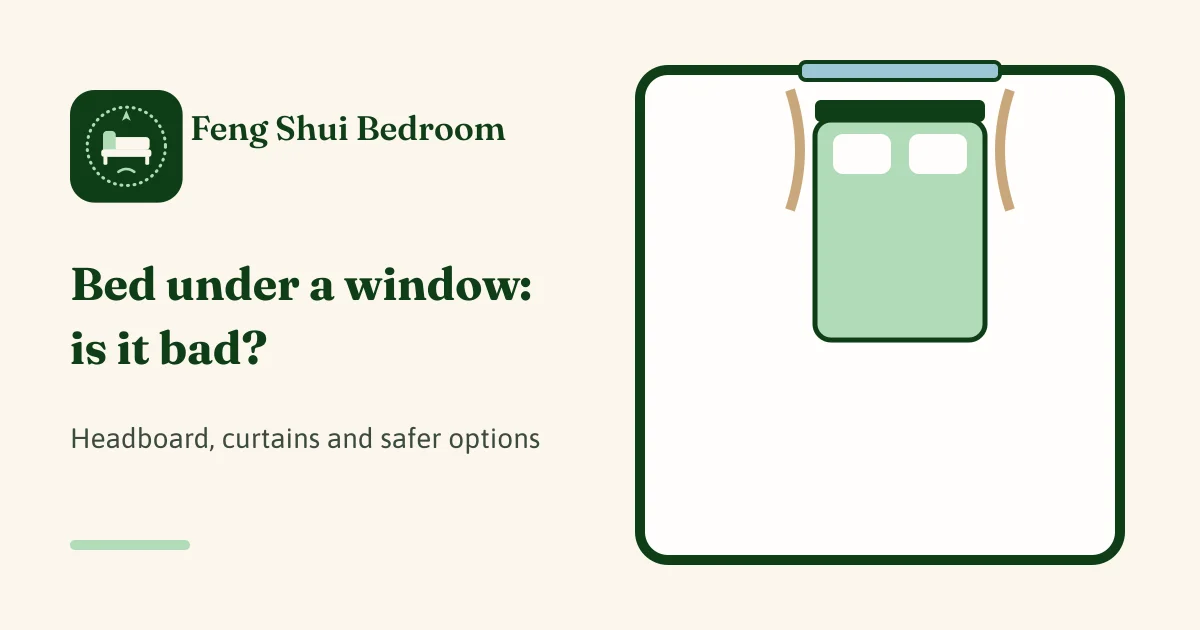
Bed Under a Window Feng Shui: Is It Bad and How to Fix It
Why feng shui bedroom advice avoids a bed under a window, when it is acceptable, and practical fixes for small rooms and rentals: headboards, curtains and layout options.
Feng Shui Bedroom Checklist: 12 Layout Rules You Can Check Tonight
A complete feng shui bedroom checklist: bed position, headboard, door line, mirrors, windows, clutter, lighting, colors and electronics, with quick fixes and rental alternatives for each rule.