How to Photograph Your Bedroom for a Feng Shui Check: A Complete Guide
Step-by-step guide to taking one clear bedroom photo for a feng shui bedroom layout check: camera position, what to include, lighting, common mistakes and rental tips.
A useful feng shui bedroom photo is boring on purpose. It is not an interior design shot for social media; it is a clear record of where the bed sits in relation to the door, the windows, the mirrors and the walls. If those relationships are visible, a layout check can tell you a lot. If they are hidden by a tight crop, a dark exposure or a strong filter, even the best analysis has to guess.
This guide walks through exactly how to take that photo with an ordinary phone: where to stand, what must be in the frame, how to handle lighting, and what to do when the room is small, awkward or rented. You will also find the most common mistakes, a few illustrative scenarios and a short checklist you can follow in under two minutes.
Why one clear photo matters for a feng shui bedroom check
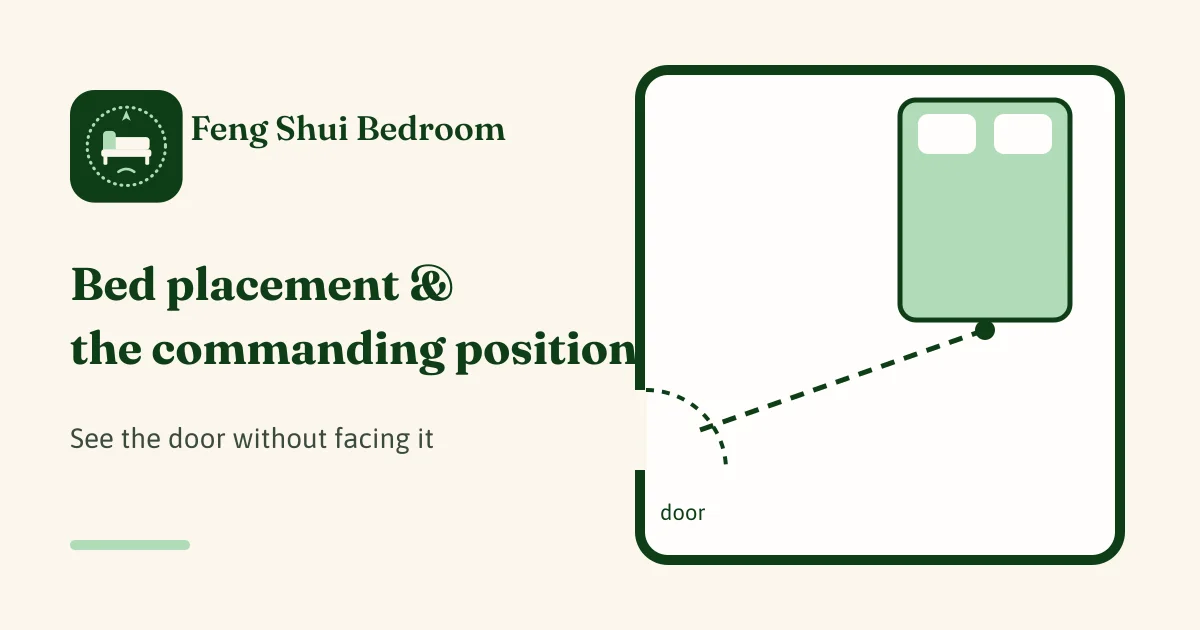
Most classic bedroom feng shui principles are about relationships, not objects. The commanding position asks whether you can see the door from the bed without lying in line with it. The mirror principle asks whether a mirror reflects the bed. The window principle asks what is behind your head. None of these can be judged from a close-up of a pillow or a beautiful bedside lamp.
A single wide photo captures several of those relationships at once:
- the bed and its headboard wall
- the main entrance to the room
- windows near or behind the bed
- mirrors, wardrobes with mirrored doors and large glossy surfaces
- the circulation path from the door to the bed
When our bedroom photo analyzer reads an image, it is looking for exactly these elements. Good input does not need to be pretty; it needs to be readable.
What to include in the frame
Before you lift the phone, look around the room and identify the four anchors below. Try to fit as many of them as possible into one image.
1. The whole bed
Show the headboard and, ideally, the foot of the bed. The headboard tells us which wall supports you while you sleep; the foot tells us which way you face. If the bed is very long relative to the room, prioritise the headboard and the sides.
2. The main door
The door is the single most important reference point in a feng shui bedroom layout. If it is visible, note whether it is open or closed. If you have two doors (for example an en-suite bathroom and a hallway door), try to show the one you use to enter the room.
3. Windows
Windows directly behind the headboard or along the side of the bed affect several recommendations. Include at least the edge of each window so its position is clear. Curtains open or closed are both fine.
4. Mirrors and reflective surfaces
Look for wall mirrors, mirrored wardrobe doors, vanity mirrors and large glossy TV screens. If any of them face the bed, they belong in the photo. For more on why, read our guide to mirrors and bed feng shui.
Step-by-step: how to take the photo
Follow these steps in order. The whole process usually takes less than two minutes.
- Turn on the lights. Open curtains during the day or switch on all ceiling lights at night.
- Clear the floor path. Pick up laundry or bags in the walkway so the route from door to bed is visible. Do not move furniture.
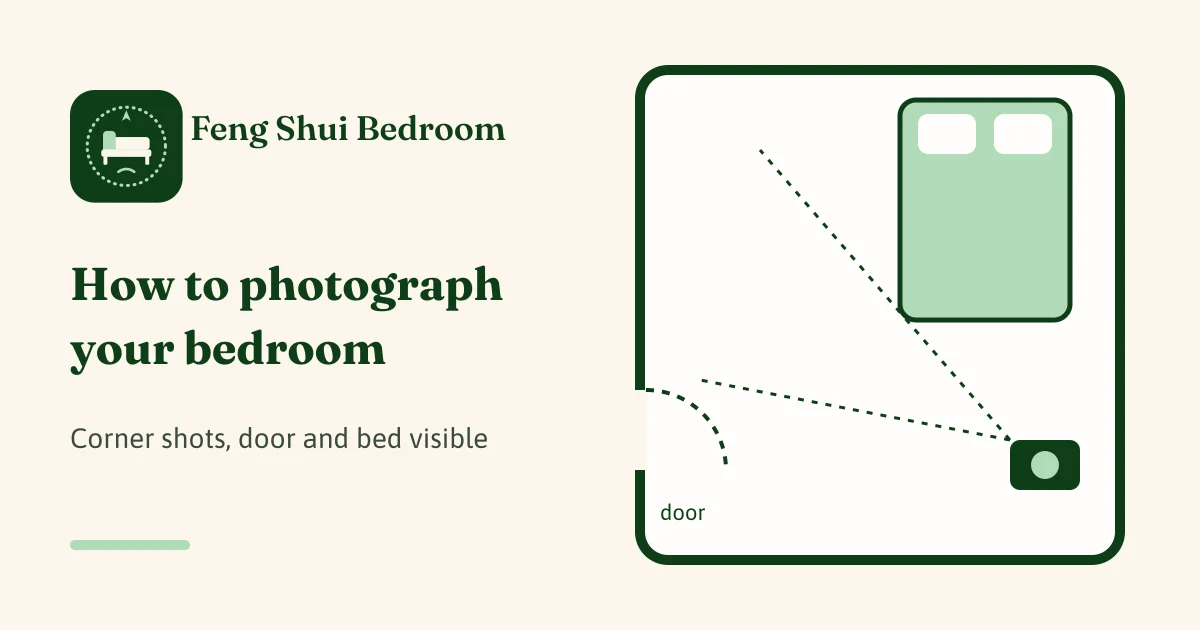
- Choose your corner. Stand in the corner diagonally opposite the bed, or in the doorway if that gives a wider view.
- Select the wide lens. On most phones tap 0.5x or "ultra-wide". If you do not have one, step back as far as you can.
- Hold the phone at chest height and tilt slightly down. This keeps furniture edges and the floor visible, which helps distances read correctly.
- Keep the phone level. Use the grid lines in your camera app so vertical walls look vertical.
- Frame the bed in the middle third. Distortion is strongest at the edges of ultra-wide images.
- Take two or three shots and pick the sharpest one.
- Check the image for the four anchors: bed, door, window, mirror. If one is missing, take a second photo from another corner.
- Upload JPG, PNG or WebP under 10 MB. No editing is needed.
Lighting, angle and format tips
Lighting
Natural daylight produces the most accurate colours and edges. If you must shoot at night, turn on every light and avoid the phone's night mode, which can smear details. Strong backlight from a window can turn the window into a white blob; if that happens, stand so the window is to your side rather than directly in front of you.
Angle
A slightly elevated, downward-tilted angle works best. Shooting from the floor makes the bed look like a wall; shooting straight down from a chair loses the doors and windows.
Format
Standard photos are perfect. Avoid panoramas: they bend straight walls into curves and can make a door look like it is on a different wall. Avoid portrait mode with background blur, which hides exactly the details we need.
Common mistakes to avoid
- Close-ups of bedding or décor only. Lovely, but they show no layout relationships.
- Heavy filters or beauty modes. Colour filters and smoothing remove edges that help identify furniture.
- Dark night photos. Grain and shadow hide windows and mirrors.
- Collages of several rooms. One room per photo, please.
- Panorama mode. Curved walls confuse door and window positions.
- Moving furniture for the shot. The analysis should reflect how you actually sleep.
- People in the frame. For privacy and clarity, keep people and pets out of the photo.
- Cropping out the door to make the room look tidier. The door is the most important reference point.
Small rooms, rentals and furniture you cannot move
Not every bedroom allows a perfect diagonal shot. Here are workable alternatives.
The room is too small to step back
Use the ultra-wide lens from the doorway. If even that fails, take two overlapping photos: one showing the headboard wall and door, another showing the opposite wall and window. Upload the one that shows the bed and door together.
The bed is built in or the landlord's furniture cannot move
That is fine; photograph it as it is. A good layout check does not assume you can rearrange everything. It should suggest soft adjustments such as a solid headboard, a rug that defines the path, curtains on a window behind the bed or covering a mirror at night. Our article on rental bedroom feng shui with a fixed bed covers these options in detail.
Mirrored wardrobe doors you cannot replace
Include them in the photo anyway. The analysis can then suggest removable film, a fabric panel or simply keeping the doors in a position that does not reflect the bed.
Shared rooms and studios
In a studio, frame the sleeping zone and the main entry door. If a sofa or desk sits between them, include it; it changes how the path to the bed works.
Example scenarios (illustrative)
The scenarios below are illustrative examples created by our team to show how photo quality affects the result. They are not user reviews.
Scenario A: the cropped close-up. Someone uploads a photo of the bed from the foot, filling the whole frame. The headboard wall is visible, but the door and windows are not. The analysis can comment on the headboard, but it has to ask follow-up questions about the door. A second wide shot from the corner resolves this in seconds.
Scenario B: the dark evening shot. A photo taken with only a bedside lamp on shows a bright pool of light and very dark edges. A large mirror on the wardrobe is invisible. After retaking with the ceiling light on, the mirror appears directly facing the bed, which changes the main recommendation.
Scenario C: the narrow rental room. The bed runs along the long wall, the door is at the foot. The renter cannot step back far enough to capture both. Shooting from the doorway with the ultra-wide lens shows the bed, the window beside it and the door frame. The result focuses on the door-to-bed line and suggests a footboard or bench as a soft buffer.
Quick photo checklist
Use this before you upload:
- Lights on or curtains open
- Whole bed visible (headboard at minimum)
- Main door visible, or I know where it is
- Windows near the bed visible
- Mirrors facing the bed visible
- Floor path from door to bed visible
- No people, no filters, no panorama
- JPG/PNG/WebP under 10 MB
If you prefer a broader room review, our feng shui bedroom checklist covers the whole layout point by point.
What happens after you upload
Our check identifies furniture and openings, then evaluates layout relationships: commanding position, door-to-bed alignment, mirrors facing the bed, what is behind the headboard and how freely you can move around the bed. Where something cannot be seen, the result says so and asks you a short question instead of guessing.
It is not fortune-telling, and it does not promise health, wealth or relationship outcomes. It is a structured way to look at your bedroom with traditional feng shui principles and practical, low-cost adjustments. If you want to understand the bed rules in depth, start with bed placement and the commanding position. For direction-based tools, browse the feng shui calculator hub, including the Kua number calculator.
Ready to check your bedroom?
Take one wide, bright photo using the steps above and upload it to the free feng shui bedroom analyzer. The preview shows the main layout findings at no cost; you can unlock the full report with every recommendation and alternative for fixed furniture when you need it.
Frequently asked questions
How many photos do I need for a feng shui bedroom check?+
One good wide photo is enough for a first check. If the door or a mirror is out of frame, a second photo from the opposite corner helps, but start with one shot that shows the bed and as many walls as possible.
Should I tidy the room before I take the photo?+
A quick tidy helps the layout read clearly, but do not move furniture just for the photo. The goal is to analyse the room you actually sleep in, so the bed, desk, wardrobe and mirrors should stay where they normally are.
Can I use the ultra-wide (0.5x) lens on my phone?+
Yes, ultra-wide is usually the best choice in small bedrooms. Keep the phone level so the walls do not bend too much, and avoid putting the bed right at the edge of the frame where distortion is strongest.
What if my door is behind me when I stand in the corner?+
That is common. Take the photo from the corner that shows the bed best, then mention where the door is when the analysis asks, or add a second photo from the door looking in.
Is a night photo okay?+
Only if the room is well lit. Dark, grainy images hide furniture edges and window positions. Daylight or all ceiling lights on gives a much more reliable result.
Do you keep my bedroom photo?+
Photos are used to run your analysis. See our privacy policy for how long data is kept and how to delete it. Avoid capturing people, documents or anything personal you would not want analysed.
Does the photo check predict health or money outcomes?+
No. The check describes layout relationships such as bed position, door alignment and mirrors, and suggests practical adjustments. It does not promise health, wealth or relationship results.
Author
Categories
More Posts
Feng Shui Bedroom Checklist: 12 Layout Rules You Can Check Tonight
A complete feng shui bedroom checklist: bed position, headboard, door line, mirrors, windows, clutter, lighting, colors and electronics, with quick fixes and rental alternatives for each rule.
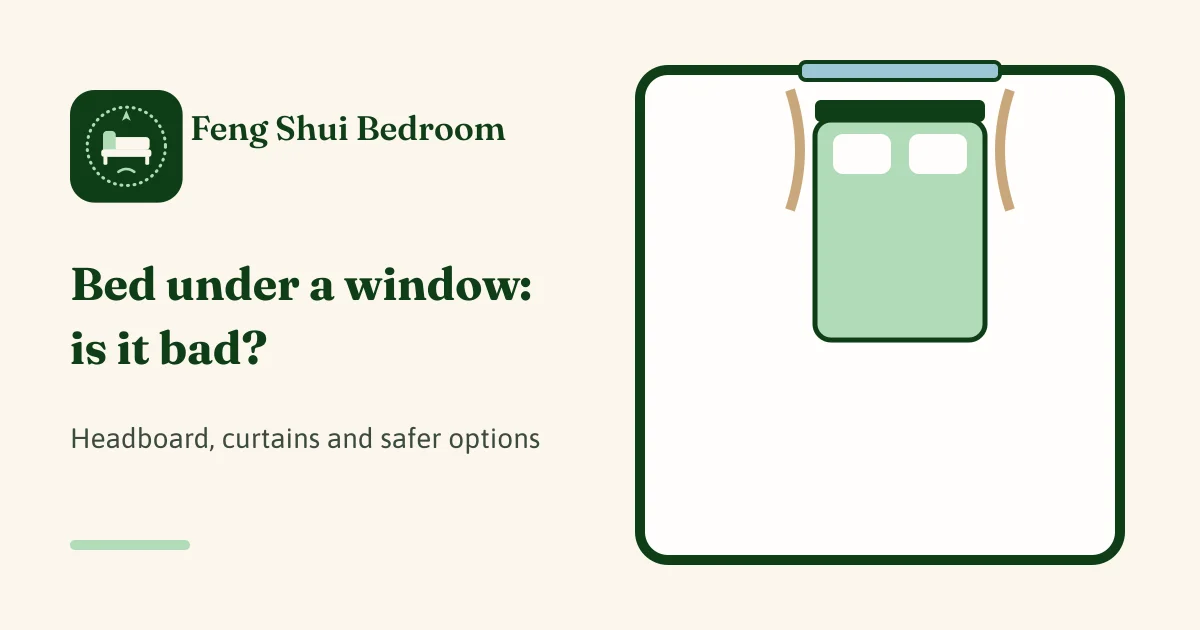
Bed Under a Window Feng Shui: Is It Bad and How to Fix It
Why feng shui bedroom advice avoids a bed under a window, when it is acceptable, and practical fixes for small rooms and rentals: headboards, curtains and layout options.
Bed Placement Feng Shui: How to Find the Commanding Position in Any Bedroom
A complete guide to bed placement feng shui: find the commanding position, avoid the door line, choose a solid headboard wall and fix awkward or rented bedrooms.